AI Diwali Card Generator
A Finished Card in About Fifteen Seconds
Describe a Diwali card and get it back as a finished image — a row of lit diyas under marigolds, a rangoli shot from above, gold lettering, fireworks over a lit skyline, or something minimal for a client list. This ai diwali card generator is free, needs no account, and the gallery below shows you at 4x exactly which details to check before you send it.
Try the AI Diwali Card Generator — Free
Pick a style, then name your colours and your greeting in the box
AI Diwali Card Generator
Choose a card style below, then describe what you want — the colours, the lamps, and any greeting or name you would like set into the card. Each preset already carries the Diwali imagery and the portrait card framing, so you only have to supply the idea. Two things worth knowing: keep counts low, because five lamps is far more reliable than fifteen, and keep any wording to three or four words, because placement wanders long before spelling does.
Renders at 3:4 portrait, the shape every image in the gallery below was generated at. For a square post or a wide email header, use the ratio picker on the home page generator instead, and trim any unwanted white border with the AI image cropper.
AI Diwali Card Generator Examples
Six cards exactly as they came back, at the same 3:4 ratio the presets use — including the ones that quietly disobeyed
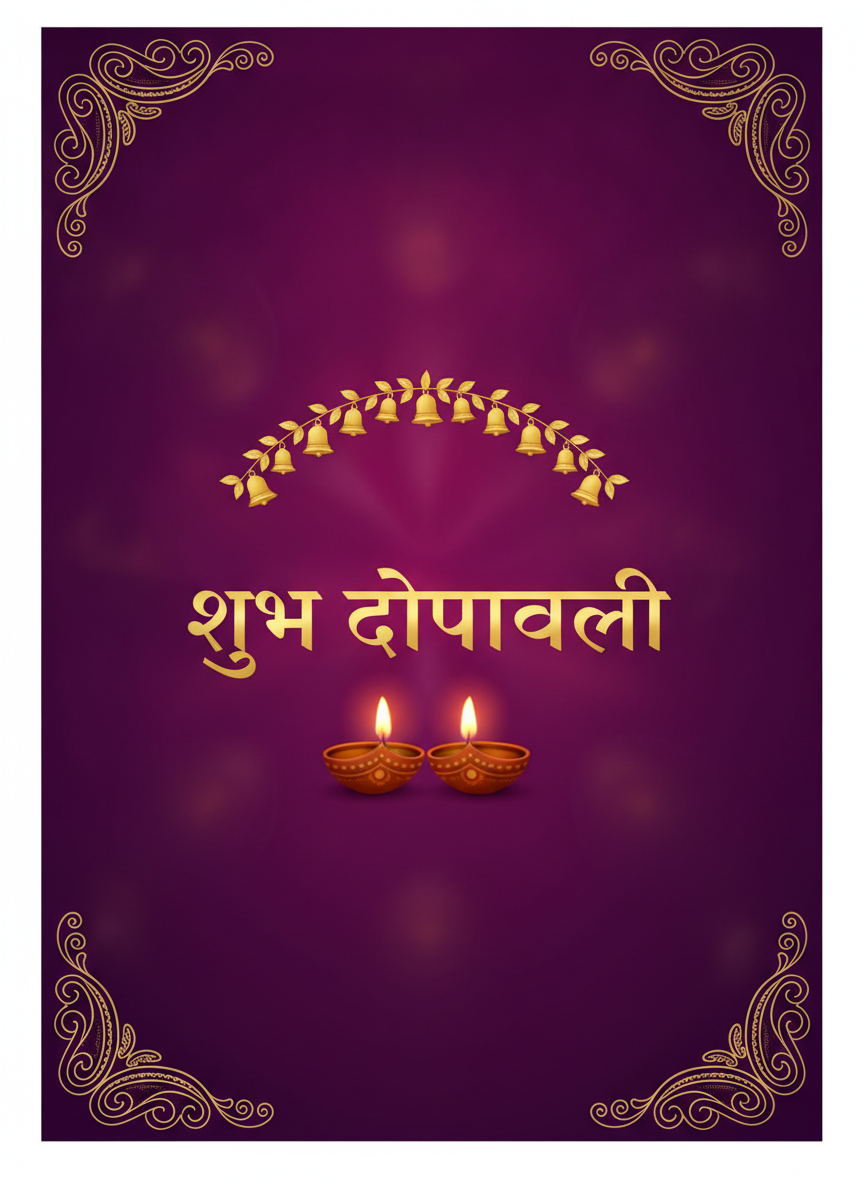
One Wrong Vowel Mark, and the Word Stops Being a Word
Study this one before you send a card in any script you cannot read. The prompt asked, in plain Hindi, for शुभ दीपावली. What came back reads शुभ दोपावली. The first word is perfect. In the second, the ी vowel sign on the द has been replaced by ो — a different vowel entirely — so "Deepavali" becomes "Dopavali", which is not a word in any language. The tell is that the very same ी mark is rendered correctly three letters later on the final ली, so the model clearly knows the shape; it simply attached the wrong one first. Everything around it is immaculate: even stroke weight, a clean unbroken shirorekha across the top, correct spacing, a gold gradient on every letter. That is exactly why nobody catches it at a glance.
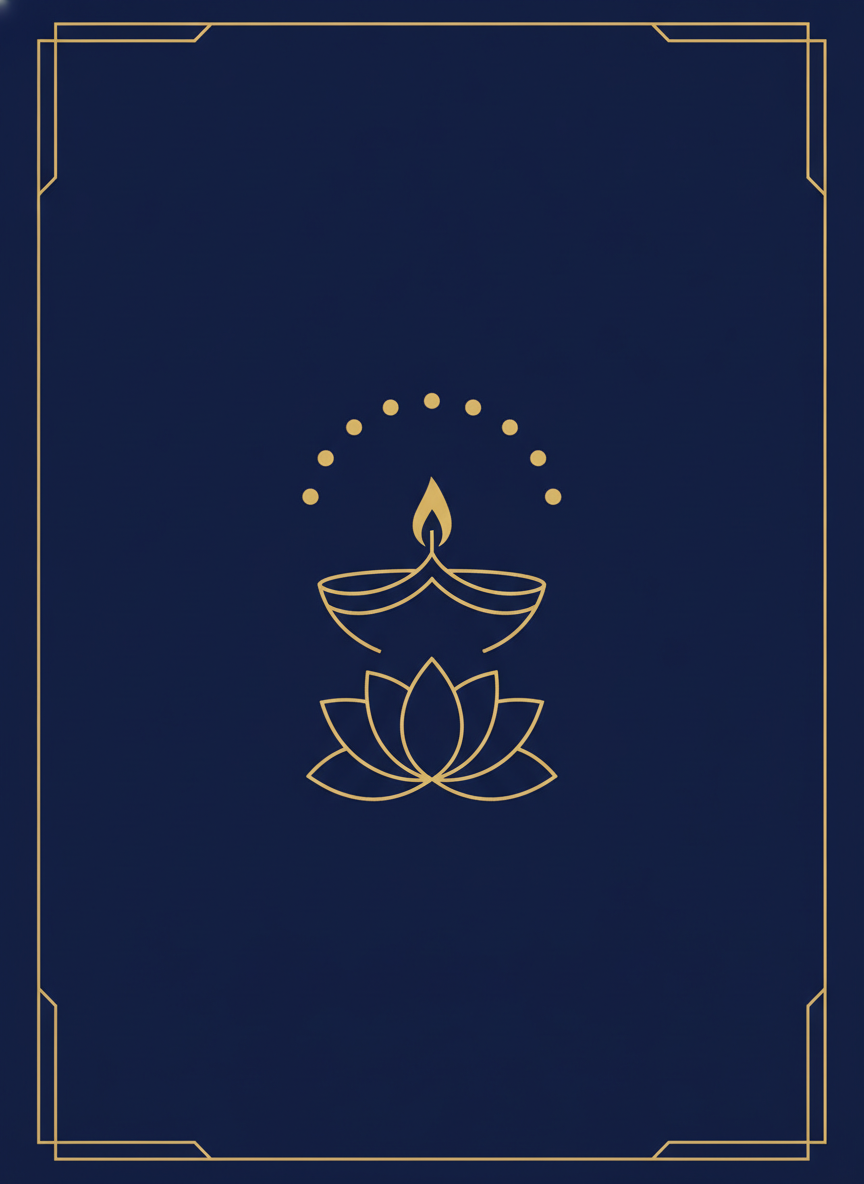
Seven Dots Requested. Nine Arrived.
There is almost nothing in this frame — a border, a line-art diya, a lotus and one arc of dots — which makes it the cleanest possible demonstration of the counting problem. Seven dots were asked for, all the same size, evenly spaced. Enlarge the arc and there are nine. They are not the same size either: the one at the apex is visibly the fattest and the one at the bottom left the smallest. And the spacing tightens as the arc climbs, so the gap between the first two dots is roughly double the gap between the third and fourth. The card is genuinely lovely and would go out to a client list tomorrow. It still does not contain the thing that was ordered.
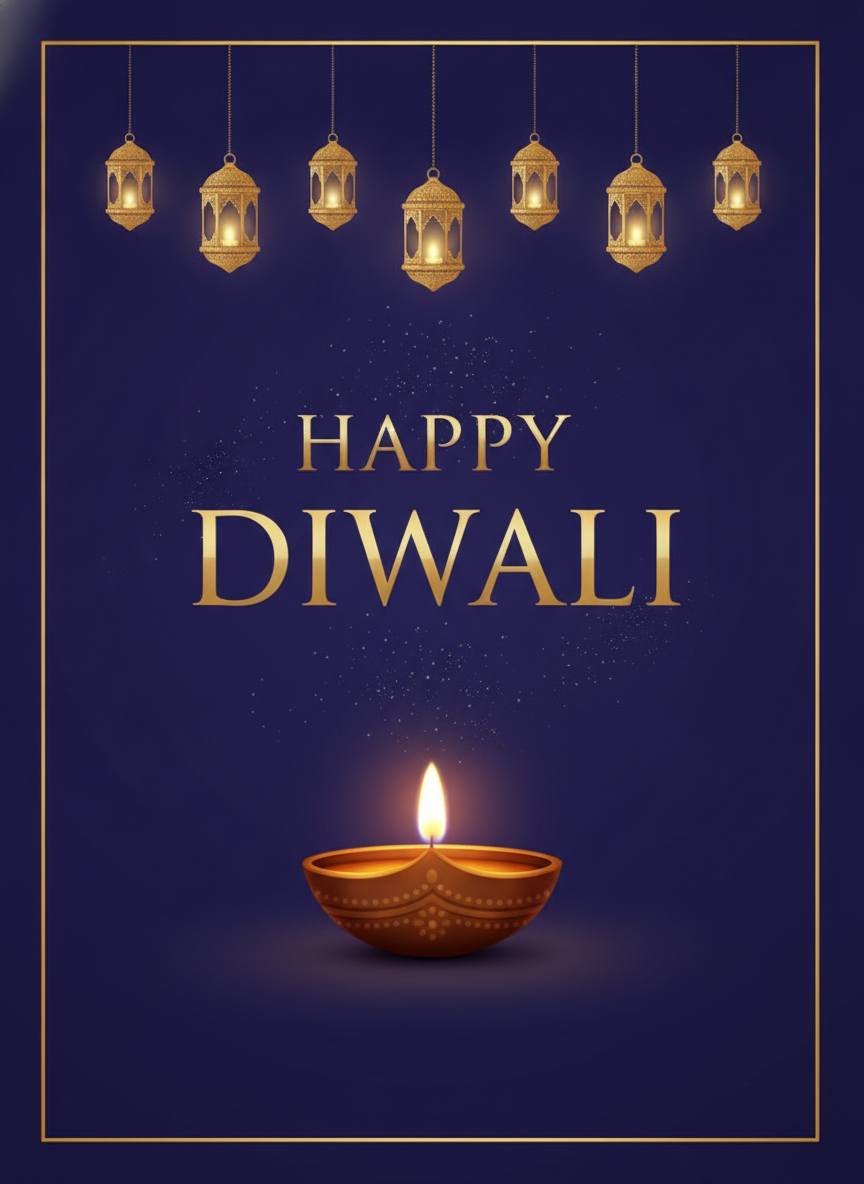
Spelled Perfectly. Set on Two Lines Nobody Asked For.
Every letter is right. H-A-P-P-Y, D-I-W-A-L-I, elegant gold serif capitals with clean gradients and no invented accent marks anywhere. The instruction it dropped was the layout one: both words were requested on a single centred line spanning most of the card, and they arrived stacked on two lines at two wildly different sizes, with DIWALI sitting a little right of the centre line. Two other things to notice. The seven lanterns requested as a row hang at seven different heights on seven different chain lengths, and one of them is a double-tiered design the others are not. And there is a blown-out white glare wedge across the top left corner, sitting right on top of the gold border, that nothing in the prompt asked for.
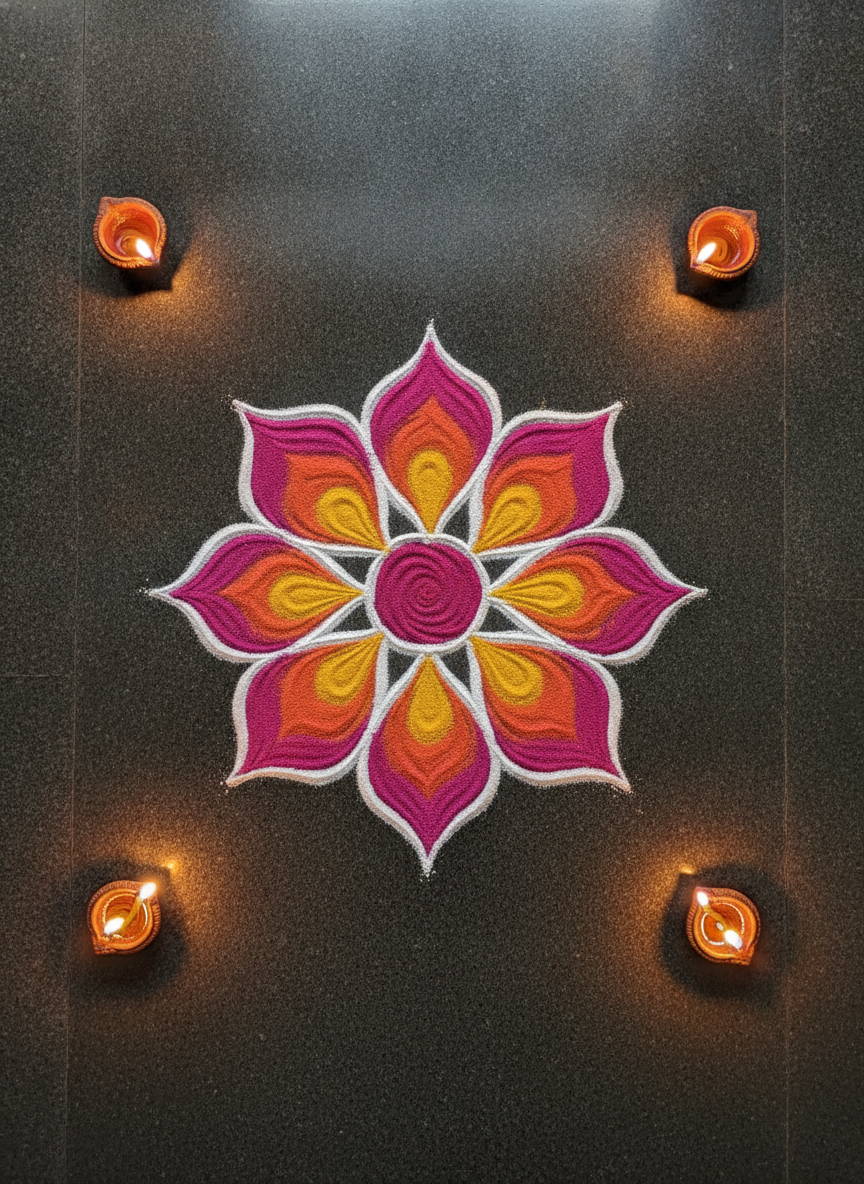
Eight Identical Petals, in Three Different Shapes
A real rangoli is laid out on a grid of dots, which is exactly why the eighth petal matches the first. This one was asked for the same way: one lotus petal motif repeated eight times at equal angles, every petal identical. The count is right — eight. The petals are not one shape, they are at least three. The pair at twelve and six o clock are narrow and sharply pointed. The four on the diagonals are broad and round-shouldered with a hooked tip. The two at nine and three are long horizontal leaves that reach noticeably further from the centre than anything else. Then look at the fills: the yellow teardrop points inward on some petals and outward on others, and the white outline runs thick on the lower left and thin across the top.
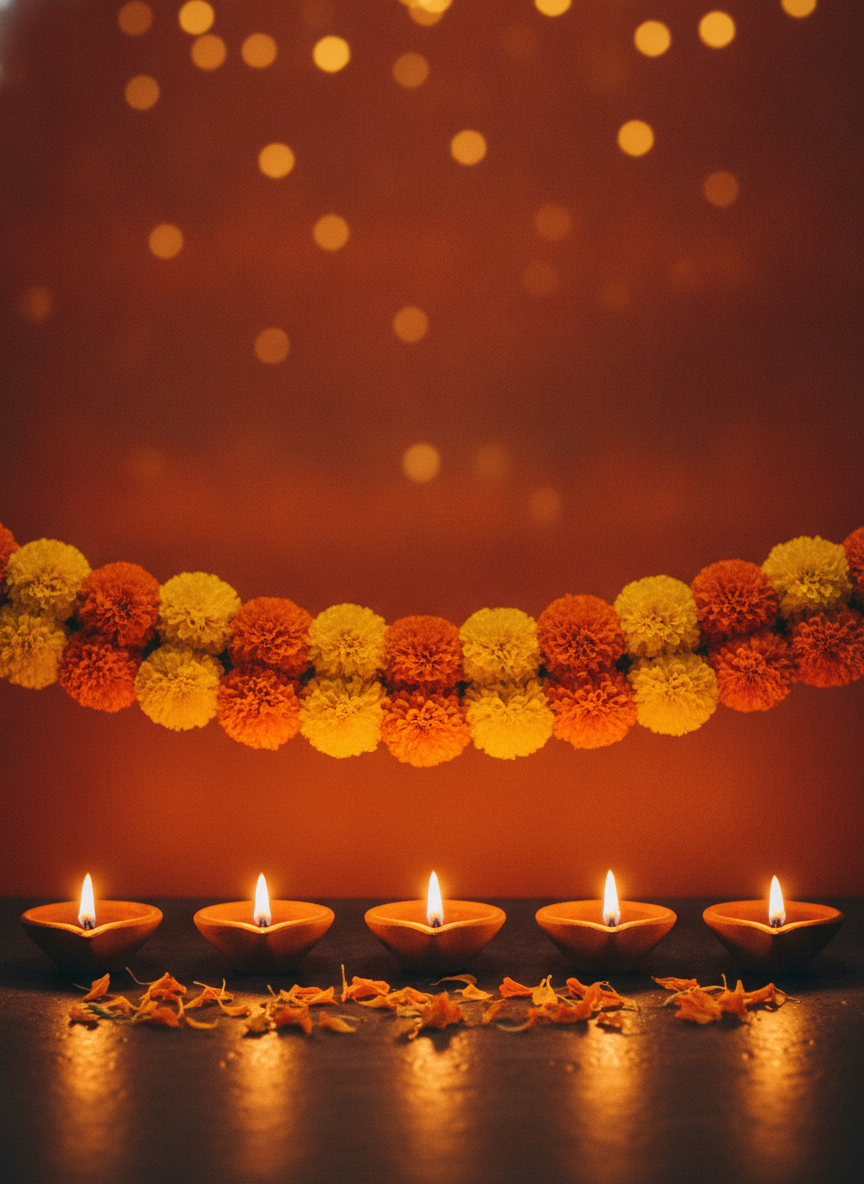
Five Lamps Asked For, Five Delivered — No Two the Same
Counting held here, which is worth saying because it is usually the first thing to break: five diyas were requested in an evenly spaced row and five turned up. Congruence is a separate question and the answer is no. Crop the row and the middle lamp is plainly larger and deeper than its neighbours, the pinched spout sits at a different point on every one of the five, and the flames are offset differently against each rim — two roughly centred, two pushed left, one nearly on the lip. The margins give it away too: the lamp at the right sits much closer to the frame edge than the one at the left. As a photograph it is beautiful. As five copies of one object it is five different objects.
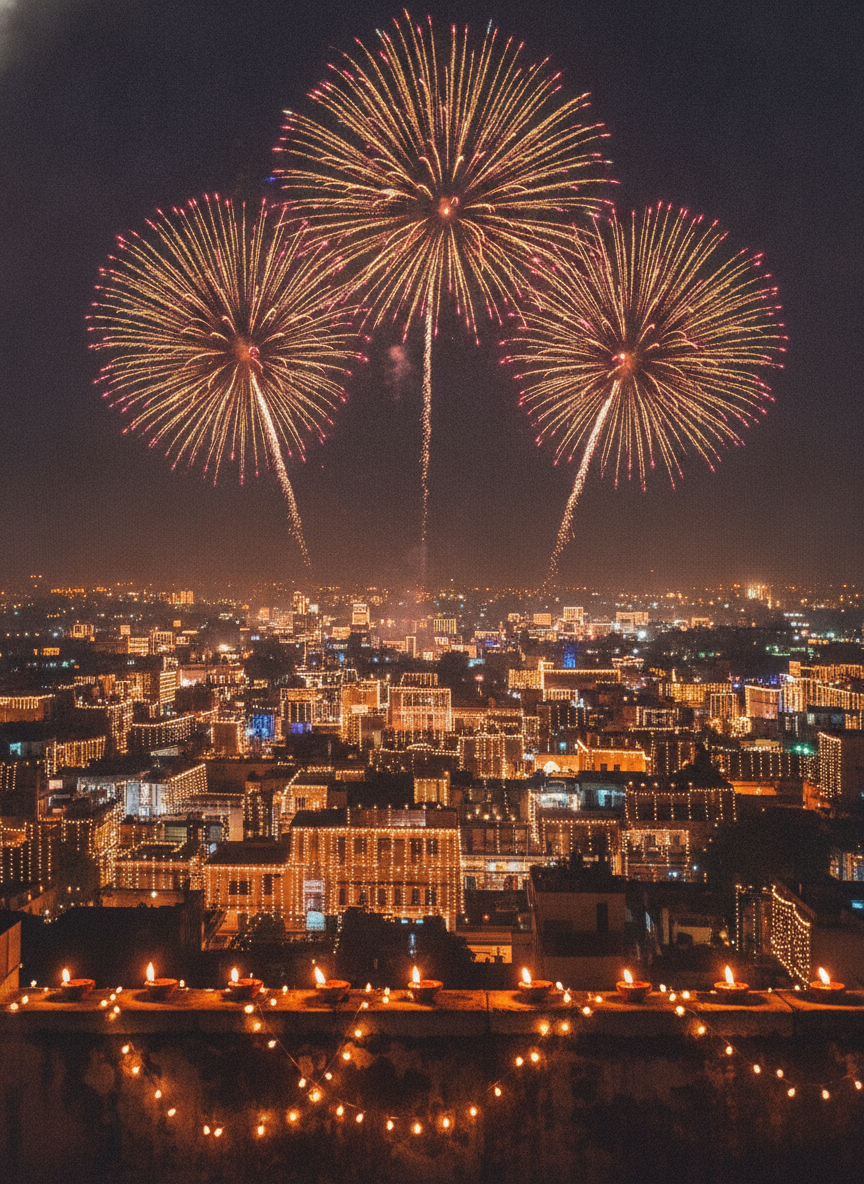
Beautiful at Card Size, Mush at Four Times
The best-looking image of the six and the one that shows you where the resolution runs out. Three firework bursts were asked for and three arrived, the parapet diyas and the fairy lights are convincing, and at full size the city reads perfectly. Crop into the middle distance at four times and it dissolves: the buildings lose their edges, the strings of lights smear into dotted lines that follow no roofline and in places float free of any building at all, and chroma noise crawls through the dark. This is not a flaw so much as a scale limit, and it is the layer a reader actually enlarges. Fine for a card, an email header or a social post. Not a poster.
Check the Script Before You Send the Card
This is the one that will embarrass you. The Hindi card at the top of the gallery was asked for शुभ दीपावली and returned शुभ दोपावली. One vowel sign on one letter is wrong — ी became ो — and that single mark turns the name of the festival into a non-word. The reason it slips through is that nothing else is wrong. The stroke weight is even, the headline runs unbroken across the top the way Devanagari requires, the spacing is professional, and the gold gradient is consistent across every letter. The same ी mark is even rendered correctly three characters later on the final ली, so the model knows the shape perfectly well; it simply attached the wrong one first. This is not a glitch you can spot by squinting for blur, because there is no blur. Expect the same on any script you cannot personally read — Devanagari, Gujarati, Tamil, Punjabi, and equally on accented Latin, where French, Spanish and Portuguese greetings routinely come back with an accent nobody asked for on a vowel that never takes one. Two safe workflows. Have someone who reads the script check the image before it goes out, or generate the card with no lettering at all and set the greeting yourself in any layout tool afterwards. For a card going to a client list, do the second one.
It Counts Badly, Repeats Nothing, and Puts Text Where It Likes
Three smaller failures, all visible in the gallery above. First, numbers drift. The minimal navy card asked for seven gold dots and delivered nine, at inconsistent sizes with the spacing tightening as the arc rose — in an image that contains four elements in total. The fireworks card, by contrast, got its three bursts right and the marigold card got its five lamps right, so it is not that counting always fails; it is that it fails without warning and without anything else looking wrong. Second, a repeat is never a repeat. Rangoli is laid out on a grid of dots, which is exactly why a real one is symmetrical. Ask for eight identical petals and you get eight petals in three different shapes, with the fills flipping direction and the outline running thick on one side and thin on the other. Same story with the five diyas: right number, five different lamps. Third, text placement fails independently of spelling. HAPPY DIWALI was spelled flawlessly and then stacked onto two lines at two sizes when one centred line was requested. Keep wording short, and check the corners too — one card came back with a white glare wedge over the border, another matted inside a white margin nobody asked for.
How the AI Diwali Card Generator Works
Three steps, and the third one is the one people skip
Pick the Style of Card
Traditional lamps, rangoli from above, gold lettering, a Hindi greeting, rooftop fireworks or minimal corporate. Each preset already carries the Diwali imagery and the card framing.
Name Your Colours and Wording
Two or three colours, and your greeting if you want one. Keep counts low and text short — ask for three lamps rather than twelve, and three or four words rather than a sentence.
Check It Before You Send It
Enlarge the lettering, count anything countable, and look at the corners for a white matte or a stray glare. Then send it, post it, or take it to a printer.
Card, Rangoli or Poster — Picking the Right Page
This page makes the card. If what you want is the symmetrical design on its own — for colouring, a tattoo or wall art rather than a festival floor — the AI mandala generator is the closer fit, and for a repeating motif to use as wrapping or a background, the AI pattern generator. For a Diwali party or a shop promotion rather than a greeting, use the AI event poster designer or the AI flyer generator. Cards for every other occasion live at the AI greeting card maker, and if the model mattes your card inside a white border, the AI image cropper takes it off in seconds.
Why Use This Diwali Card Generator
Because one card is easy and forty slightly different cards is the actual problem
Six Diwali Styles Built In
Diyas and marigolds, rangoli from above, gold lettering, a Hindi greeting, rooftop fireworks and a minimal corporate card. The presets carry the festival vocabulary so you only supply the idea.
Your Own Name or Greeting
Type a name, a family greeting or a company line into the box and it gets set into the card. Latin letters come back spelled correctly; check where they landed rather than how they are spelled.
Honest About Devanagari
The gallery shows a Hindi greeting where one vowel mark is wrong and the word stops being a word. We say so on the page rather than let you find out after you have sent fifty cards.
Corporate and Personal
The minimal navy-and-gold preset is built for a client mailing, the marigold and fireworks presets for family. Same tool, and you can run a dozen variations before committing to one.
Card-Shaped, Ready to Send
3:4 portrait, no watermark, straight to WhatsApp, email or a print shop. The one thing to check first is whether the model has matted it inside a white border, which it sometimes does.
Free, No Sign Up
About fifteen seconds a card, no account, no queue. Generate six, keep the two that work, and send them before the lamps are lit.
Who Uses It
Anyone who needs more than one card and does not want to open a layout app
Families and Friends
A card with your own family greeting on it, generated in the time it takes to find a template everybody else is also sending. Make three, send the one that feels right.
Businesses and Client Lists
The minimal navy-and-gold preset is built for exactly this. Generate the artwork, set your company line in a layout tool afterwards, and you have a corporate Diwali card nobody will recognise from a stock library.
Social and WhatsApp
Portrait 3:4 sits well in a feed and fills a phone screen in a chat. No watermark, so nothing on the image points anywhere except at your greeting.
Shops and Restaurants
Festival artwork for a window card, a menu insert or a seasonal post. Generate a handful of variations, pick the palette that matches your signage, and keep the rest for next year.
AI Diwali Card Generator FAQ
The script problem, the counting problem, and what the file is actually good for
Free AI Diwali Card Generator — Diyas, Rangoli, Gold Lettering and Fireworks
Diwali cards have a specific problem that Christmas cards mostly do not: people send a lot of them, to quite different audiences, in the same week. The card that goes to your family is not the card that goes to a client list, and the card a shop puts in its window is a third thing again. Buying a template solves one of those and leaves you editing the other two, which is how everyone ends up sending the same four stock designs. A free ai diwali card generator removes the cost of variation. You describe the card — the colours, the lamps, the greeting, whether it should feel warm and traditional or restrained and corporate — and about fifteen seconds later you are looking at a finished 3:4 portrait card. Generate six, keep two, send them.
The six presets on this diwali card generator cover the shapes the occasion actually comes in. Diyas and Marigolds is the traditional one: a row of lit clay lamps under a flower garland with petals scattered in front and bokeh in the dark above. Rangoli From Above shoots a circular powder design straight down onto a dark floor with lamps around it. Gold Lettering puts your greeting across a richly coloured card in serif capitals with a fine gold border. Hindi Greeting sets शुभ दीपावली in Devanagari with paisley corners and a bell arch. Rooftop Fireworks is the photographic one, bursts over a city where every building is strung with lights. Minimal and Corporate is flat navy and thin gold line art, built for a business mailing. Each preset already carries the festival vocabulary and the card framing, so all you supply is the idea and, if you want one, the wording.
Two limits, demonstrated in the gallery rather than asserted, because between them they decide whether this tool fits your job. The first is script. The Hindi card above asked for शुभ दीपावली and returned शुभ दोपावली — one vowel sign swapped on one letter, which turns the name of the festival into a non-word, inside lettering that is otherwise flawless in weight, spacing and gradient. The same mark is rendered correctly three characters later, so the model was never confused about the shape. Treat any script you cannot read as a draft, and expect the same on accented Latin. The second is that it draws rather than repeats or counts. Eight identical rangoli petals came back as eight petals in three shapes; five identical diyas came back as five different lamps; seven gold dots came back as nine. None of that is visible at a glance, which is precisely the danger, and all of it takes ten seconds to check by enlarging the image.
For almost everything people want a Diwali card for, none of that matters. A greeting sent on WhatsApp, a post, an email header, a window card or a menu insert only ever needed a convincing image, and this produces one in seconds without an account or a watermark. It matters if the card carries a language you cannot proofread, or a company name that has to be exact, in which case generate the artwork clean and set the type yourself afterwards. The neighbouring tools finish the job: symmetrical designs on their own at the AI mandala generator, repeating motifs for wrapping at the AI pattern generator, party graphics at the AI event poster designer, every other occasion at the AI greeting card maker, typography treatments at the AI typography generator, and white borders trimmed at the AI image cropper. Everything here is free to try, nothing is watermarked, cards come back at 3:4 portrait, and paid plans start at $2.99. Scroll back up and make one.