AI Coat of Arms Generator
A Shield, a Helm and a Motto in Fifteen Seconds
Describe the symbols and the colours you want and get back a full heraldic achievement — shield, closed helm, mantling and a motto on a ribbon. This ai coat of arms generator is free, needs no account, and the gallery below shows at full size where it miscounts the charges you asked for and where it spells the same name two different ways in one image.
Try the AI Coat of Arms Generator — Free
Pick a style, add your surname, motto and charges in the box, and proofread the lettering when it lands
AI Coat of Arms Generator
Choose one of the six heraldic styles below, then use the box underneath to add your own surname, motto and charges — the animals, plants, tools or objects you want on the shield. Name your colours as well as your symbols, because in heraldry the colour is half the meaning. Two things worth knowing before you start: lettering is where this model fails most often, so read any motto or name back letter by letter at full size rather than glancing at it, and it cannot count, so check every repeated charge against the number you asked for — three fleurs-de-lis came back as two and five stars came back as seven in the examples below.
Renders at 3:4 portrait, the shape every image in the gallery below was generated at, and the natural proportion for a full achievement. There is no ratio picker on this page, so for a square profile picture or a wide letterhead banner, crop the result with the AI image cropper or pick a different ratio on the home page generator.
AI Coat of Arms Generator Examples
Six crests exactly as they came back, at the same 3:4 ratio the presets use — read the mottos closely
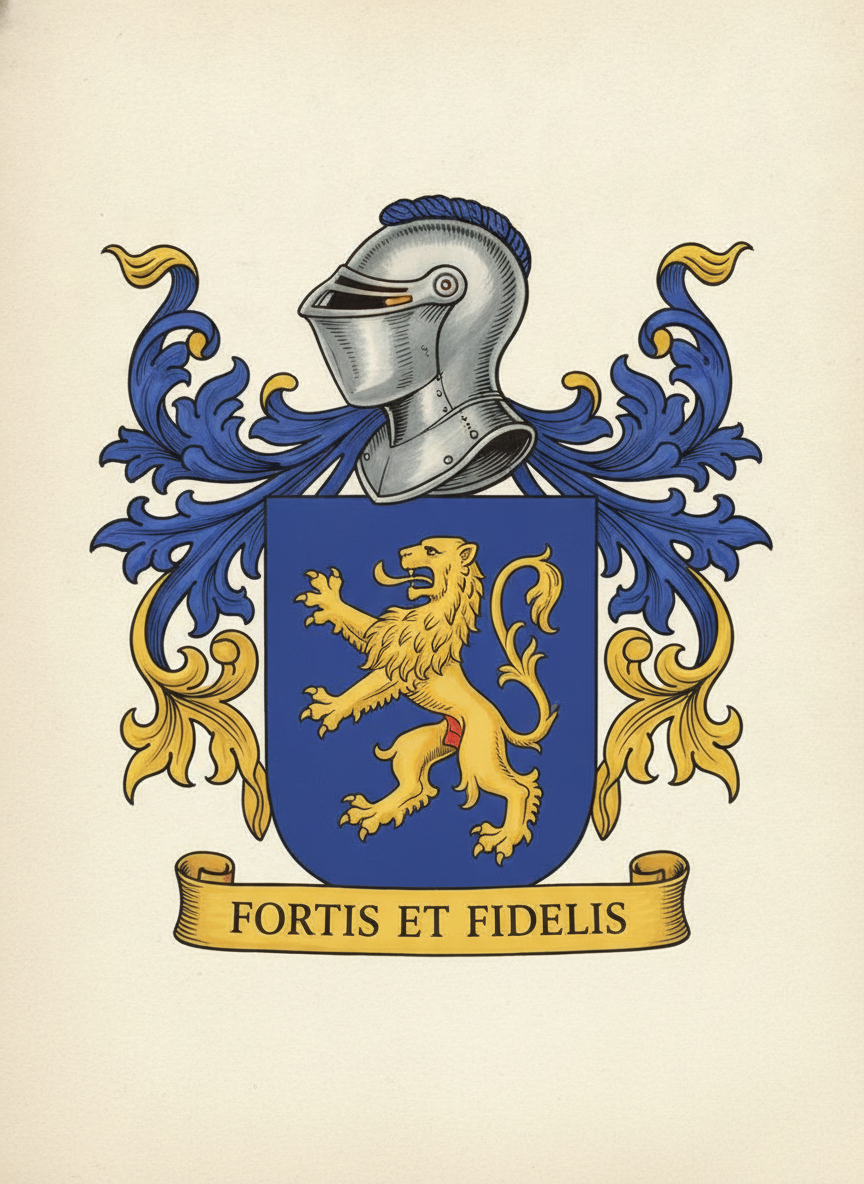
The Motto Landed Perfectly. The Helmet Is Facing the Wrong Way.
Against the letterhead above, this is the encouraging one, and it points at the safest way to work. The motto was requested as plain unaccented capitals reading FORTIS ET FIDELIS, and that is exactly what came back — no invented acute, no grave, no extra mark on any letter. Short Latin in capitals is the most reliable text you can ask this model for, which is lucky, because that is what mottos are. The heraldry is sound too: a gold lion on a blue field is a metal on a colour, which is what the rule of tincture actually requires, and the mantling, the rivets and the painted armorial look are lovely. The one instruction it dropped is a directional one. The closed helm was asked to face left; it faces right. Real heraldry treats the direction a helm and a beast face as meaningful rather than decorative, so it is worth checking, but as misses go this is a cheap one.
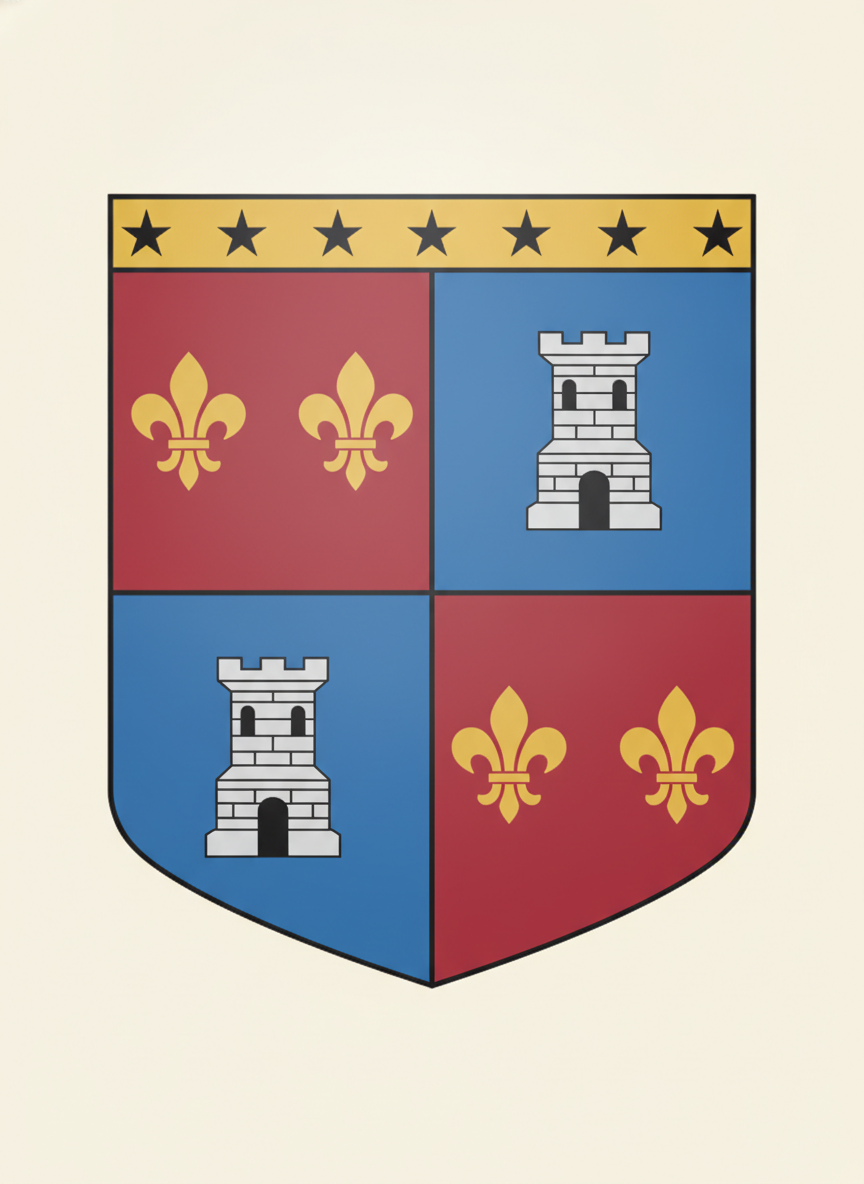
Every Charge You Can Count Is the Wrong Number
A handsome shield, and almost nothing on it is the quantity that was requested. Both red quarters asked for exactly three gold fleurs-de-lis, arranged two above and one below; both came back with two. The gold band across the top asked for exactly five black stars in a row; there are seven. The only charges it got right were the ones where the answer was one — a single silver tower in each blue quarter, both correct. This is worth dwelling on because heraldry is a language in which the number is the meaning: three stars and five stars are different arms belonging to different people, in the same way that two words are different words. The tinctures here are all legal, the quartering is properly constructed and the drawing is clean, which is exactly why nobody counts. Count.
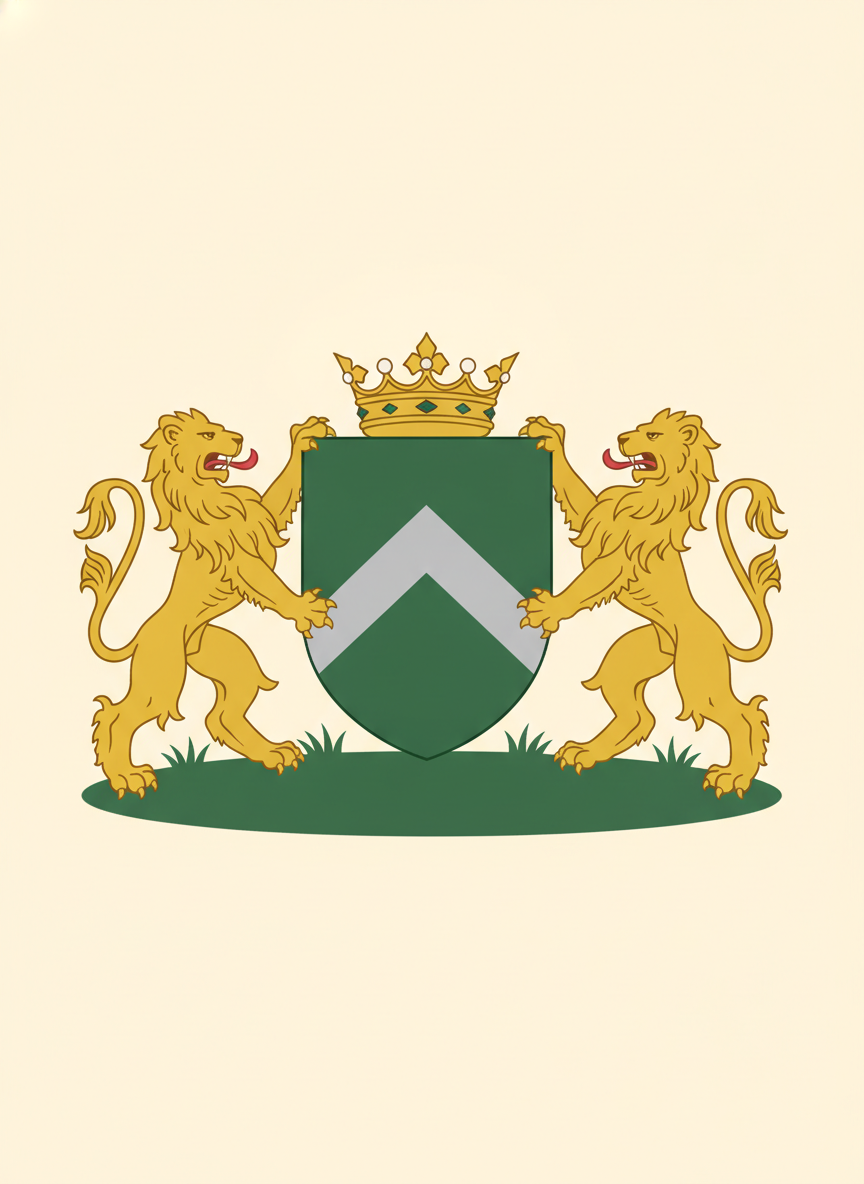
Near-Perfect Mirroring — and the Motto Scroll Simply Never Arrived
The best result of the six on the thing that usually fails. Two lions were asked to be exact mirror images of one another, and they very nearly are: the same mane, the same tail curl and tuft, the same stance, the same claws on the shield rim. Crop the two heads together and the differences are down to the length of a tongue and a slightly wider muzzle on the right. So bilateral symmetry about a centre line, inside one image, is a strength — remember that, because the shield grid further down shows what happens when the same model is asked to repeat something instead of mirror it. What it lost was an entire component. The prompt asked for a ribbon scroll below the compartment for the motto; there is no scroll anywhere in the image. It did not misspell the motto, it removed the place the motto goes. Check that every element you asked for is actually present before you start reading the ones that are.
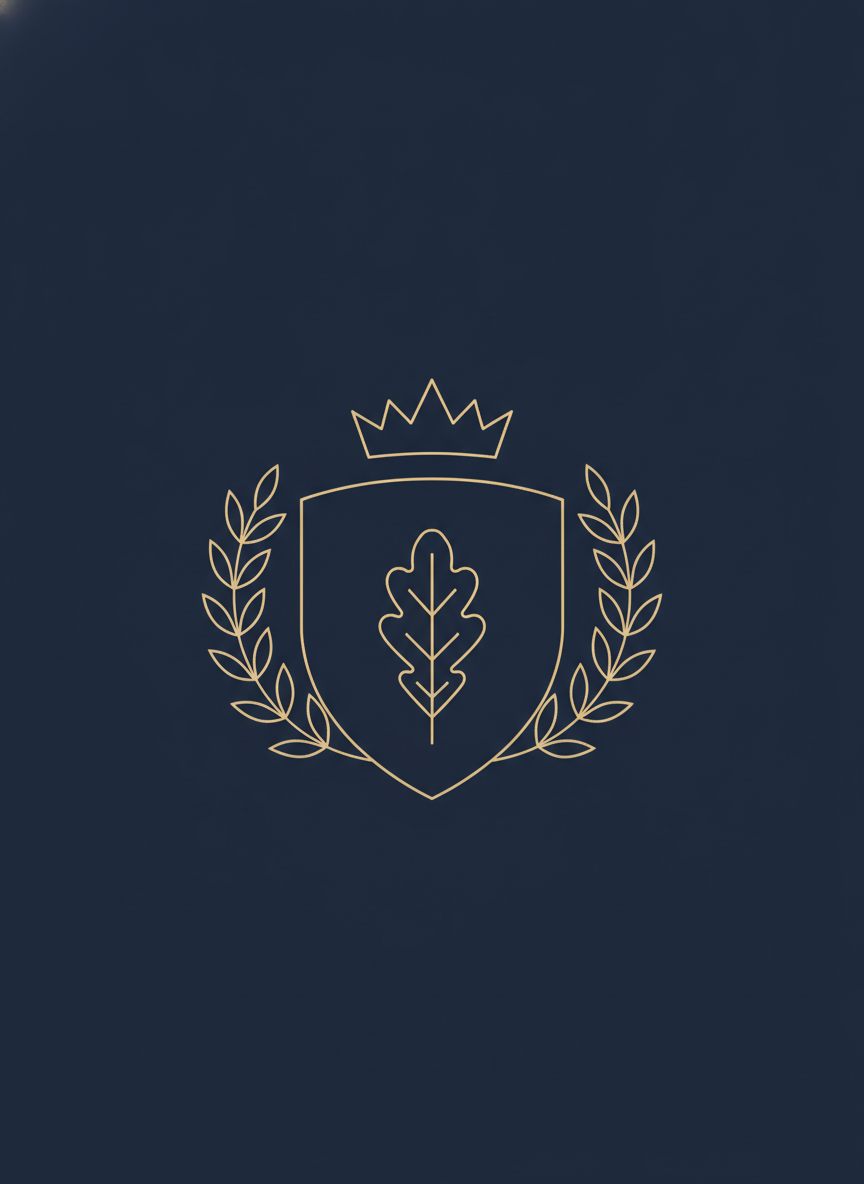
Flawless Line Weight, and a Coronet With the Wrong Number of Points
The style instruction was the strict one here — every line exactly the same thickness as every other line, no shading, no gradient, no fill — and it was followed exactly, which makes this the preset to reach for if you want something that will sit next to a modern wordmark. Then count the crown. A three-point coronet was requested and a five-point one was drawn. It is the same failure as the stars on the quartered shield, in an image containing only four elements, which is the uncomfortable part: a sparse composition is not a safer one. The other thing to notice is framing. The crest occupies a small patch in the middle of a large empty navy rectangle, so a good deal of the resolution you paid for is background. Crop in before you use it anywhere the detail matters.
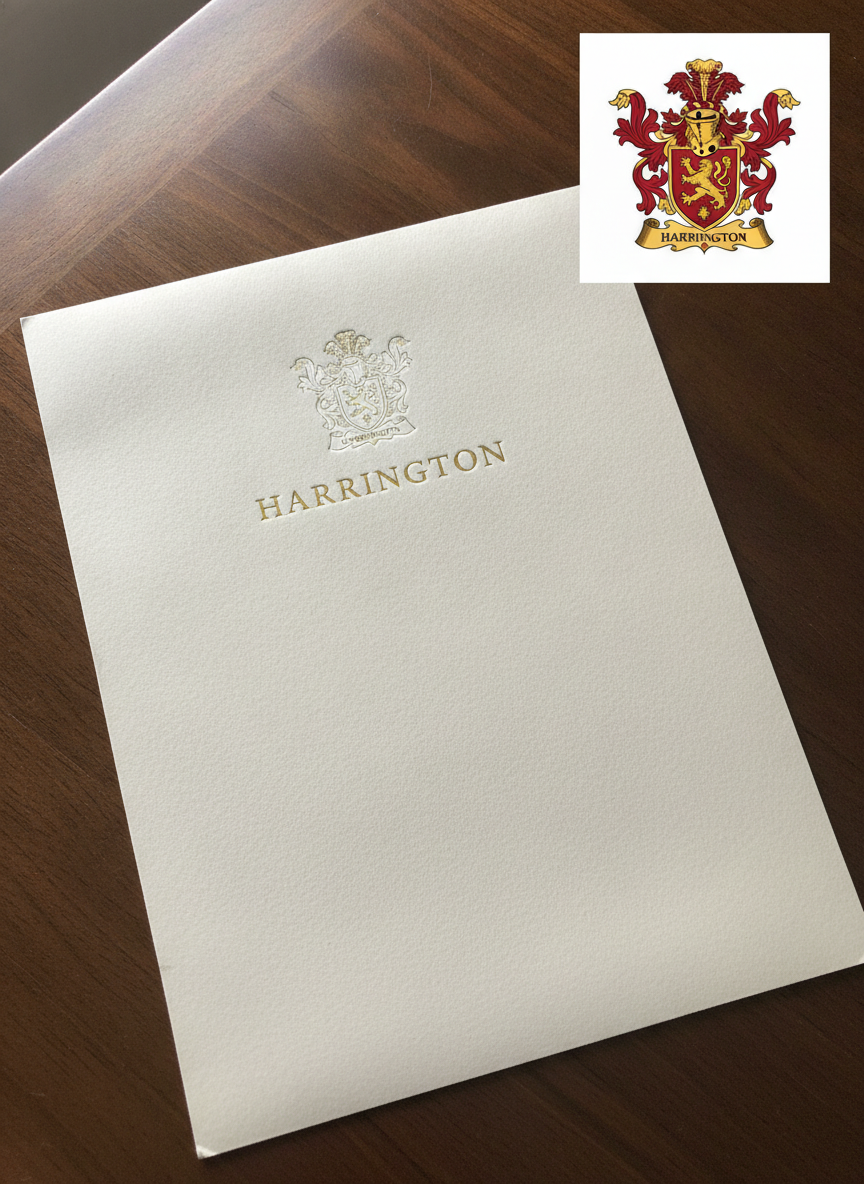
The Same Surname, Three Times, in One Image
Start here, because this single render is the whole argument of the page. The prompt asked for one sheet of letterhead carrying a crest and the surname HARRINGTON, spelled exactly that way, with no other words anywhere. The name ended up on the sheet three separate times, and it is spelled three different ways. The large gold letterspaced capitals are perfect: H-A-R-R-I-N-G-T-O-N, correct on the first attempt. The scroll inside the little colour crest pasted into the top right corner reads HARRIINGTON, with the I doubled — enlarge it and the extra letter is unmistakable, at full size it is invisible. And the scroll on the embossed crest in the middle of the sheet is not language at all, just a row of pressed squiggles arranged to look like type. That white corner panel, incidentally, was never requested either; the prompt said nothing else on the sheet. One generation, one name, one correct rendering, one misspelling and one piece of nonsense.
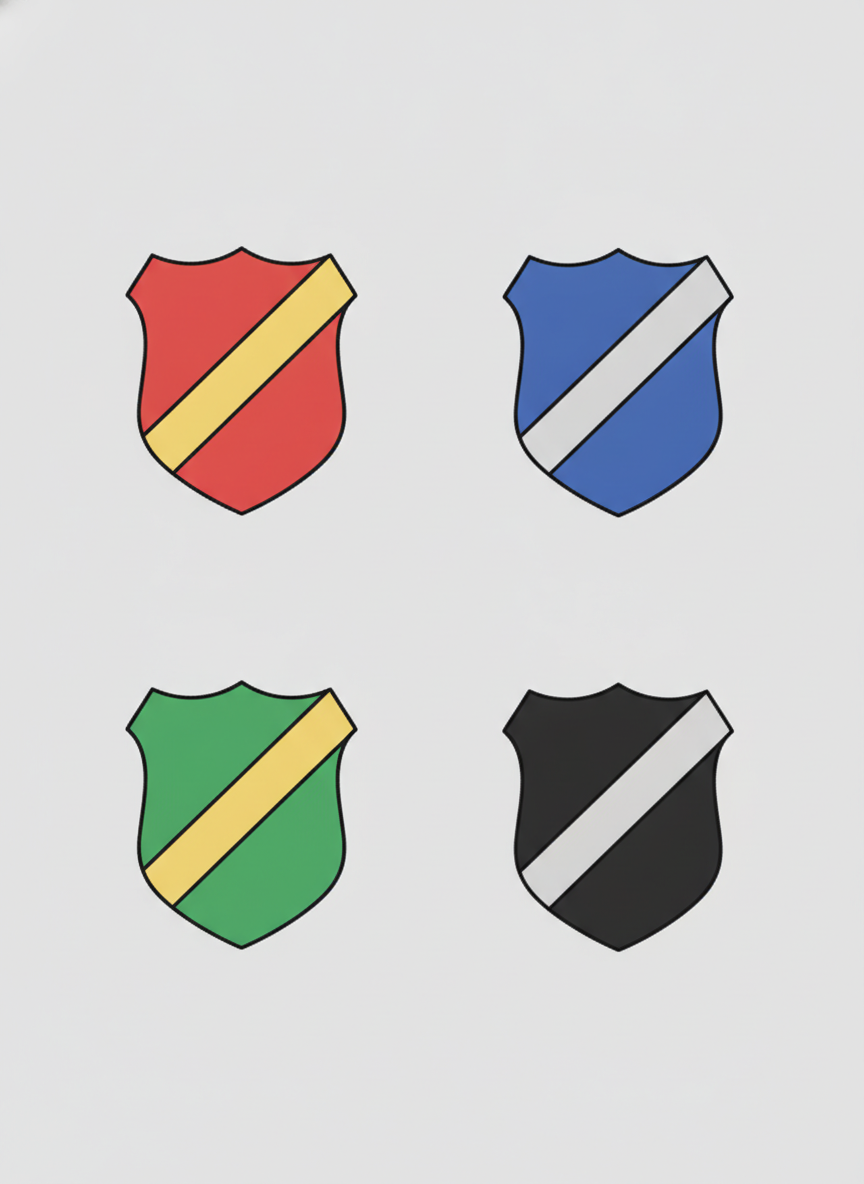
Four Shields From One Template. None of Them Match.
The clearest evidence on the page that this model draws rather than repeats. Four shields were asked for in a two by two grid, every one with the same outline, the same width, the same height and the same curvature, as if cut from one template. Put the bottom two side by side and the green shield is visibly larger than the black one, with deeper concave shoulders and a rounder point, while the black one is narrower and more angular with a flatter top. The gold band across the green is wider than the silver band across the black. Compare that with the two mirrored lions above and you have the rule in one page: this model mirrors well and repeats badly, because a mirror is one gesture and a repeat is four separate drawings. One bonus error, consistent across all four: every diagonal band was asked to run from the top left corner down to the bottom right, and every single one runs the other way. In heraldry that is not a rotation, it is a different charge with a different name.
Lettering Is Where This Breaks, and a Coat of Arms Has Words In It
If you take one thing from this page, take the letterhead at the top of the gallery. One image was asked to render one surname, and it rendered it three times: once in large gold capitals, spelled HARRINGTON, completely correctly; once on a small scroll, spelled HARRIINGTON with the I doubled; and once on an embossed scroll as a line of squiggles that is not writing at all. Three attempts at the same eleven letters inside a single generation, and they disagree with each other. That is the shape of the problem: it is not that the model cannot spell, it is that spelling is not stable, so a correct result tells you nothing about the next one. The good news is in the first gallery image, where FORTIS ET FIDELIS came back perfect with no invented accents at all — short Latin in plain capitals is the most reliable text you can ask for, and mottos are short Latin in plain capitals. Practical advice, in order: keep the wording short, keep it in capitals, prefer Latin or unaccented English, read the result letter by letter at full size rather than glancing at it, and generate two or three when it matters. If the wording absolutely has to be right — an invitation, a printed certificate, anything with a real family name on it — generate the crest with no lettering at all and set the type yourself afterwards. That is the only approach that is actually dependable.
It Mirrors Beautifully. It Cannot Count, and It Cannot Repeat.
Heraldry is a rule system and the model has learned it as a look. It has plainly absorbed thousands of correct armorials: the mantling falls properly, the helm sits where a helm sits, the gold is convincing, and in these six images it never once broke the rule of tincture unprompted. What it does not do is arithmetic. Three fleurs-de-lis were requested twice and two arrived both times; five stars were requested and seven arrived; a three-point coronet came back with five points. The only charges that came out right were the ones where the requested number was one. This matters more in heraldry than almost anywhere else, because the count is the meaning — three stars and five stars are different arms belonging to different people. Repetition fails the same way. Four shields asked to be identical, as if cut from one template, came back at four different sizes with four different outlines, and all four diagonal bands ran the opposite way to the one requested. The striking exception is mirroring. Two lion supporters asked to be exact mirror images of each other are near enough perfect, down to the curl of the tail. A mirror is one gesture; a repeat is four separate drawings. So: trust it with symmetry, never with quantity. Count every charge against what you asked for, confirm nothing you requested has silently vanished — the supporters image dropped its motto scroll entirely — and if strict heraldic correctness matters, use this to explore a design and take the final version to a heraldic artist.
There Is No Such Thing as a Surname’s Coat of Arms
This is not a limitation of the model, it is a fact about heraldry that most “family crest” sites are built on ignoring. In every tradition that actually grants arms — the College of Arms in England and Wales, the Court of the Lord Lyon in Scotland, the Chief Herald of Ireland, and their equivalents across Europe — arms are granted to a person and inherited by that person’s descendants. They are not attached to a surname, and never have been. The shops that will sell you “the Murphy coat of arms” on a plaque are selling you arms that belonged to one particular Murphy, to whom you are probably not related. What this page makes is a personal emblem you designed, in the way a monogram or a logo is yours — use it on a wedding invitation, a book plate, a club shirt or a D&D house and it is entirely yours to use. Just do not describe it as inherited, and do not ask the model to reproduce the arms of a real family, university, city or football club: many of those are protected by law or trademark quite separately from copyright, and the heraldic authorities do enforce it. Ask for the symbols you want instead of naming an institution.
How the AI Coat of Arms Generator Works
Three steps, and the third one is the one people skip
Pick a Style and Name Your Charges
Choose one of the six presets, then type the symbols you want on the shield — an oak, a stag, a ship, three stars. Name the colours too, because heraldry is colour as much as shape.
Add the Surname and the Motto
Type them in the exact capitals you want to see. Short is safer than long, and Latin is safer than a language with accents, for reasons the gallery makes obvious.
Proofread the Letters, Then Count the Charges
The step that matters. Read the motto and the name letter by letter looking for marks nobody asked for, then count every repeated charge against what you requested.
Crest, Logo or Certificate — Picking the Right Page
This page builds emblems in the heraldic register. If you want a mark for a business that has to survive being shrunk to a favicon, the AI logo generator is built for that and handles wordmarks and monograms directly. For a team badge rather than a family one, pair this with the AI jersey design generator or the AI fantasy football logo generator. A crest belongs on a wedding invitation or an award certificate more often than anywhere else, both of which have their own pages. For the shield as a tattoo, the AI tattoo generator gives you line work built for skin, and any margin the model adds comes off with the AI image cropper.
Why Use This Family Crest Generator
Because a heraldic artist charges by the commission and takes a fortnight
Six Heraldic Styles
A full achievement with helm and mantling, a quartered shield, a grand version with lion supporters, a minimal gold monoline crest, an embossed stationery look and a school or club badge.
Your Own Name and Motto
Text-to-image, so there is a box for the surname, the motto and the charges you want on the shield. Read the lettering back carefully — that is the part the model gets wrong.
Honest About Heraldry
The gallery shows where it miscounts the charges, drops a whole motto scroll and misspells a surname, at full size, instead of leaving you to find out on a printed invitation.
Weddings, Clubs and Campaigns
Monograms for a wedding, badges for a house or a team, sigils for a D&D house or a fantasy kingdom. The style is the same; only the charges change.
As Many Designs As You Like
A heraldic artist charges by the commission. Generate a dozen, keep the one where the tinctures and the lettering both landed, and refine it from there.
Free, No Sign Up
About fifteen seconds a crest, no account, no queue, no watermark. Work through the six presets to find the register you want, then add your own details.
Who Uses It
People who want the emblem, not the fourteen-week wait and the commission fee
Couples Planning a Wedding
A crest that marries two sets of symbols is the oldest idea in heraldry and still the nicest thing you can put at the head of an invitation, on a seal, or on the napkins. Use the Quartered Shield preset, which is literally what quartering is for.
Clubs, Teams and School Houses
The School and Club Badge preset is deliberately the plainest of the six, because a crest that has to be embroidered on a blazer pocket or printed on a shirt needs two colours and a heavy outline, not gold leaf and acanthus mantling.
Worldbuilders and D&D Players
Noble houses, guilds, kingdoms and factions all want a sigil, and none of them need to pass a herald’s inspection. This is the use where the model’s loose grip on the rules costs you nothing at all — invent freely and generate a set.
Family Historians
A crest for the cover of a family history, a reunion programme or a chart, built from symbols that mean something to your particular family — a trade, a county, a ship. Read the FAQ on inherited arms first so the caption underneath it is honest.
AI Coat of Arms Generator FAQ
Heraldry, surnames, mottos, sizes and what you may do with the result
Free AI Coat of Arms Generator — Family Crests, Club Badges and House Sigils
Heraldry is the oldest visual identity system in Europe and it was designed for one practical problem: telling armoured men apart at a distance. Everything about it follows from that. The shield is bold because it had to read across a field, the colours are few and strong because they had to survive mud and weather, and the rule of tincture — never a metal on a metal, never a colour on a colour — exists purely so the charge stands off its field. Nine hundred years later the same grammar is still doing work on club badges, school blazers, passports, whisky labels and the sigils of imaginary noble houses. An ai coat of arms generator puts that grammar within reach of anybody with a description and fifteen seconds, instead of a commission and a fortnight’s wait.
The six presets on this coat of arms maker cover the range the format is actually used across. Full Achievement is the complete thing: shield, closed helm above it, acanthus mantling falling to either side and a ribbon scroll for the motto, painted like a plate in a bound armorial. Quartered Shield divides the field into four and gives each quarter its own charge, which is how heraldry has always combined two families and why it is the right preset for a wedding. Lions and Supporters adds the ceremonial furniture — a beast on each side of the shield, a compartment beneath, a crown above. Minimal Monoline strips all of it back to a single gold line on navy for people who want the idea of a crest rather than the ornament. Embossed Stationery renders the crest as a physical object, foiled and blind embossed into cotton paper. School and Club Badge is deliberately the plainest, built with two flat colours and a heavy outline so it survives being embroidered small.
Two limits, demonstrated in the gallery above rather than asserted, because between them they decide whether this fits your job. The first is lettering. This model is extraordinarily good at drawing letterforms and unreliable at spelling them, and a coat of arms is a format with words built into it. One image in the gallery renders the same surname three times and spells it three different ways, so a correct result tells you nothing about the next one. The motto is the part of a crest people actually read, so read it back letter by letter before you commit it to anything printed. The second is that heraldry is a rule system and the model has learned it as a look. It has clearly absorbed thousands of correct armorials and reproduces the style with real fluency — the mantling falls properly, the helm sits right, the gold is convincing. But it is matching patterns rather than applying rules, and above all it cannot count: three fleurs-de-lis came back as two, five stars as seven, a three-point coronet with five points. Four shields asked to be identical arrived at four different sizes. None of that is visible at thumbnail size, which is exactly why it is worth a minute of your time at full size.
For most of what people want a crest for, none of that is a blocker. A wedding monogram, a house badge, a book plate, a family history cover, a guild sigil or a tattoo only ever needed a convincing emblem, and this free coat of arms generator makes one in seconds with no account and no watermark. It matters when the wording has to be exact or the heraldry has to be correct, in which case generate the crest with no lettering at all and set the type yourself, or take the design to a herald. The neighbouring tools finish the job: a scalable business mark at the AI logo generator, team identity at the AI jersey design generator and the AI fantasy football logo generator, the invitation itself at the AI wedding invitation generator, formal documents at the AI certificate generator, heraldic beasts and figures at the AI character portrait generator, line work built for skin at the AI tattoo generator, and any unwanted margin trimmed at the AI image cropper. Everything here is free to try, nothing is watermarked, crests come back at 3:4 portrait, and paid plans start at $2.99. Scroll back up and design one.