AI VTuber Avatar Generator
Design the Persona, Then Hand It to a Rigger
Describe your streamer persona and get it back as anime artwork — full body, half body, expression sheet, chibi. This AI VTuber avatar generator makes the reference set a rigger asks for, free, in about fifteen seconds a render.
Try the AI VTuber Avatar Generator — Free
Pick a shot type, describe your character in the box, and paste the same description into every run
AI VTuber Avatar Generator
Choose a shot type below, then describe your persona in the box — hair colour and cut, eye colour, three garment colours, one accessory. Keep that description identical across every run; changing it is what makes the character drift. Everything here is static reference art for a rigger, not a rigged model.
The tool here renders at 3:4 portrait, the natural shape for a standing character. For a wide turnaround sheet or a debut card, start on the home page generator, which has a 16:9 option, and tidy the result with the AI image cropper. The rest of the channel lives elsewhere: emotes come from the AI Twitch emote generator, channel graphics from the AI stream overlay generator, and a plain profile picture from the AI avatar generator.
AI VTuber Avatar Generator Examples
Six renders exactly as they came back — including the ones that show you where the limits are
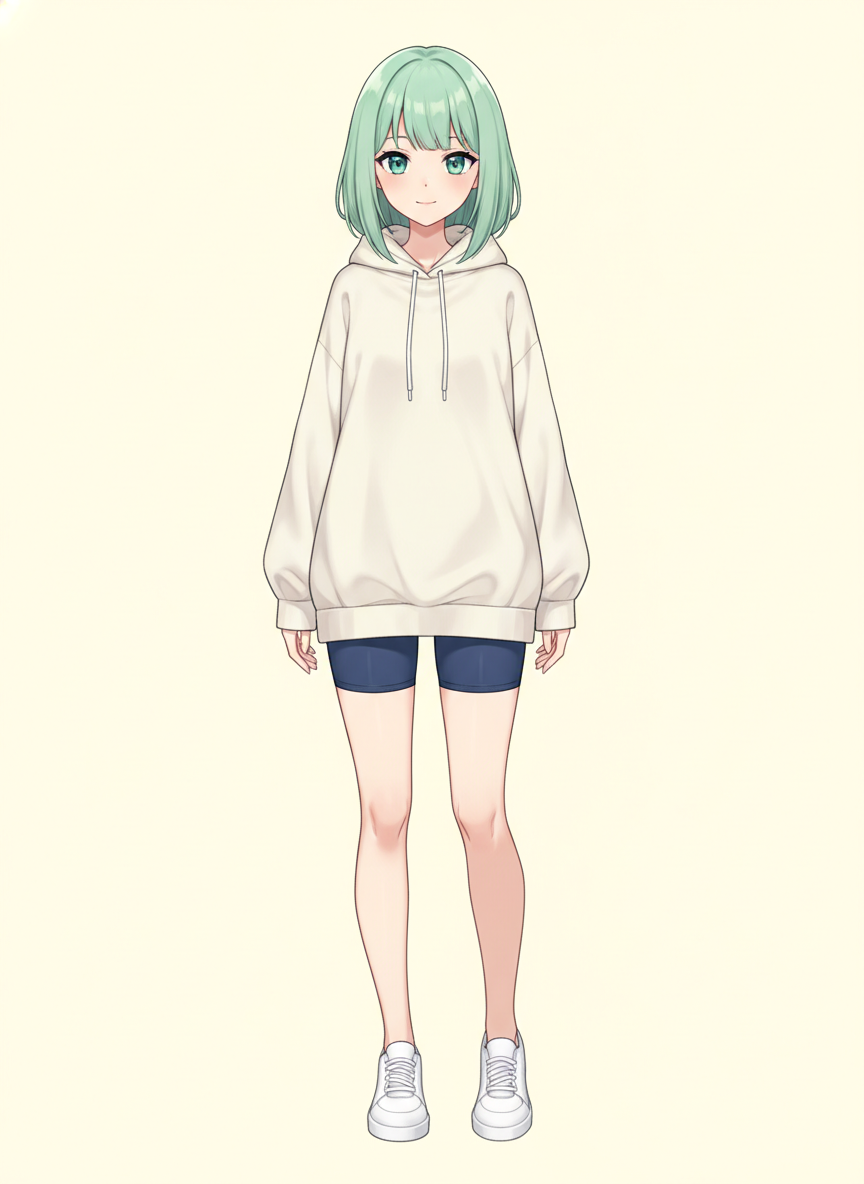
A Clean Front View, and Hands Fused to the Thighs
Mint bob, cream hoodie, flat even lighting, plain background — this is the shape of thing you actually send a rigger. Two drifts sit in it. The knee-length shorts asked for came back as mid-thigh bike shorts almost entirely hidden under the hoodie, because the model shortens clothing unless you insist. And both hands hang flat against the thighs, touching the silhouette, which is the one thing a rigger does not want: arms need clear space under them so the arm layer can be cut away from the body.
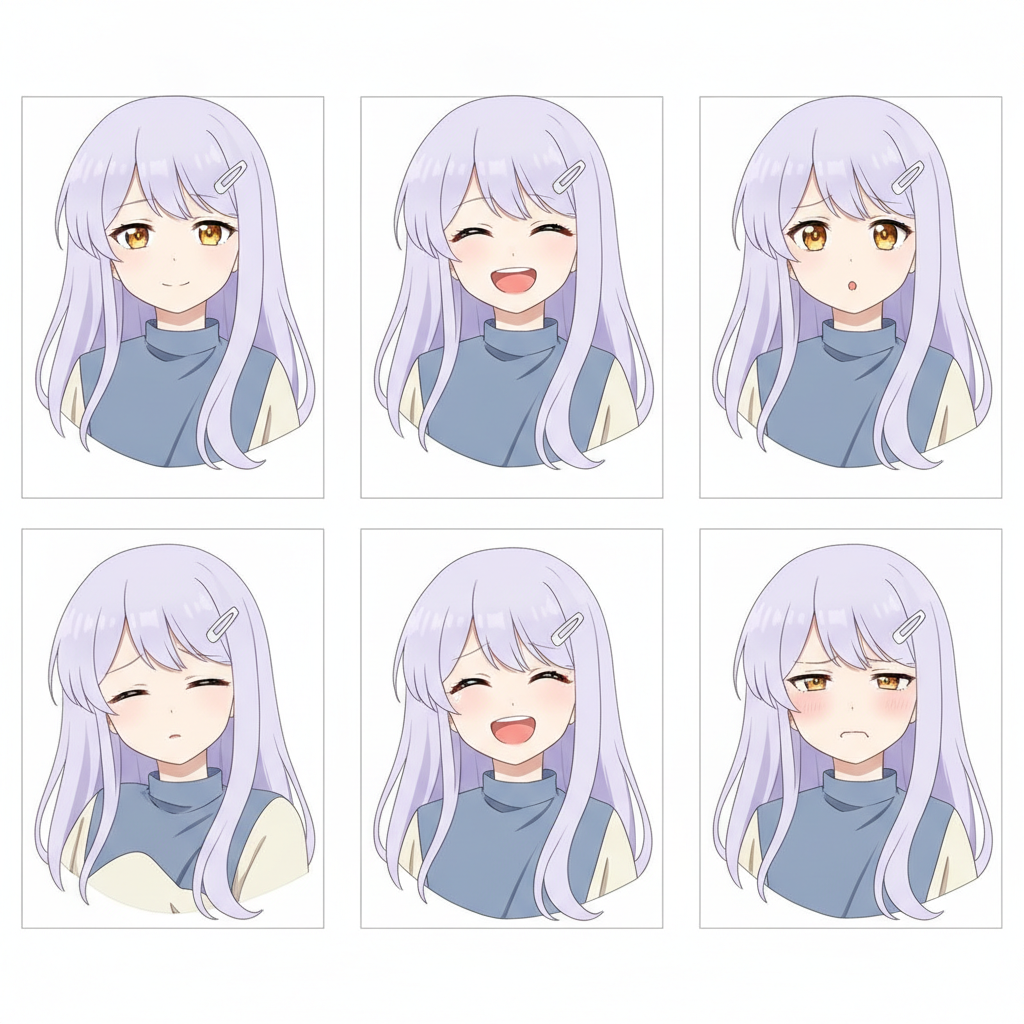
Six Panels, Six Separate Drawings
The count is exactly right — two rows of three — and the expressions arrived in the order asked: neutral, happy, surprised, sleepy, laughing, pouting. The hair clip stayed on the same side in all six. But panels two and five are effectively the same drawing, so six expressions bought five useful faces. And the hair is redrawn slightly differently in every panel. These are six illustrations of one face, not one face with a swappable mouth, which is exactly the difference between reference art and a rig.
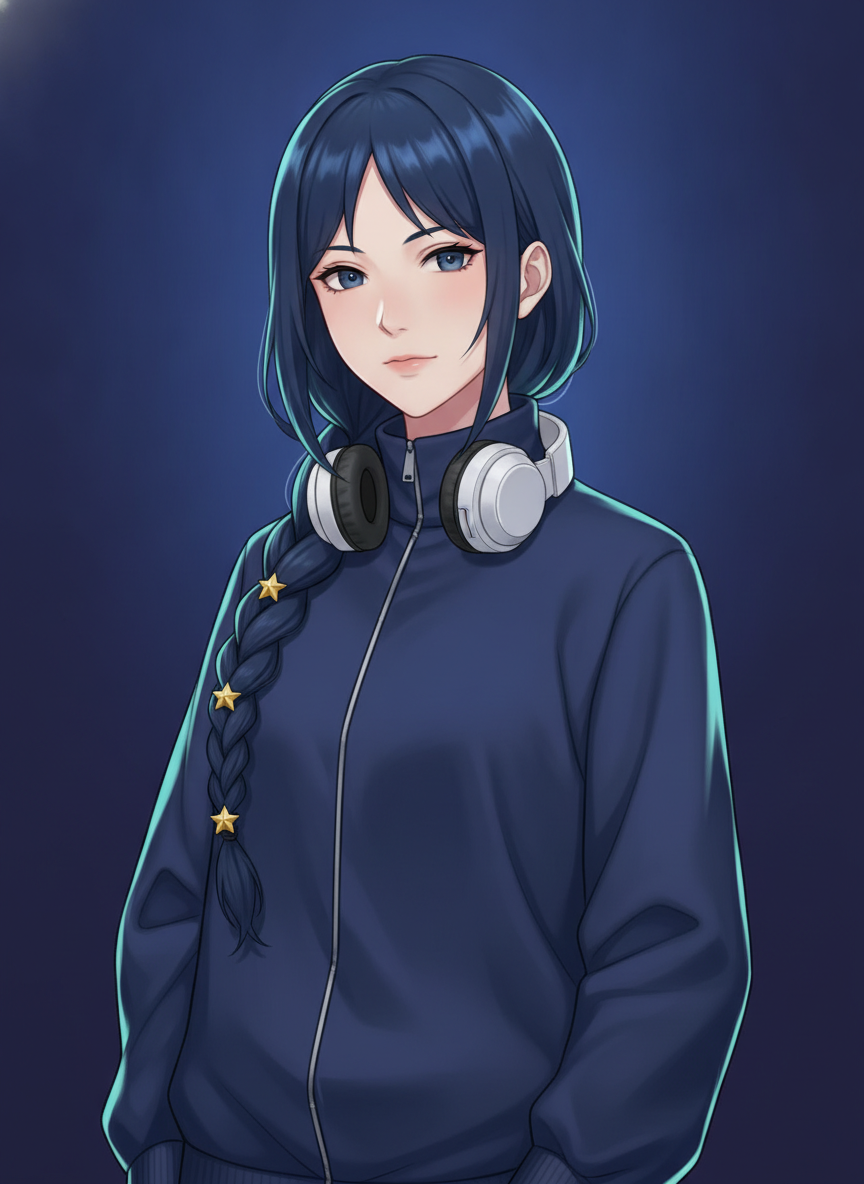
The Prettiest One, in the Wrong Art Style
The braid over the shoulder with exactly three gold star clips, the headphones round the neck, the cyan rim light — every element landed. It also came back soft, painterly and semi-realistic, while the full body above it came back flat and cel-shaded, from prompts on the same page asking for the same treatment. That is the character consistency limit in a single image: run two presets, get two different artists. Choose a style, write it into every prompt, and never assume two generations belong to the same character.
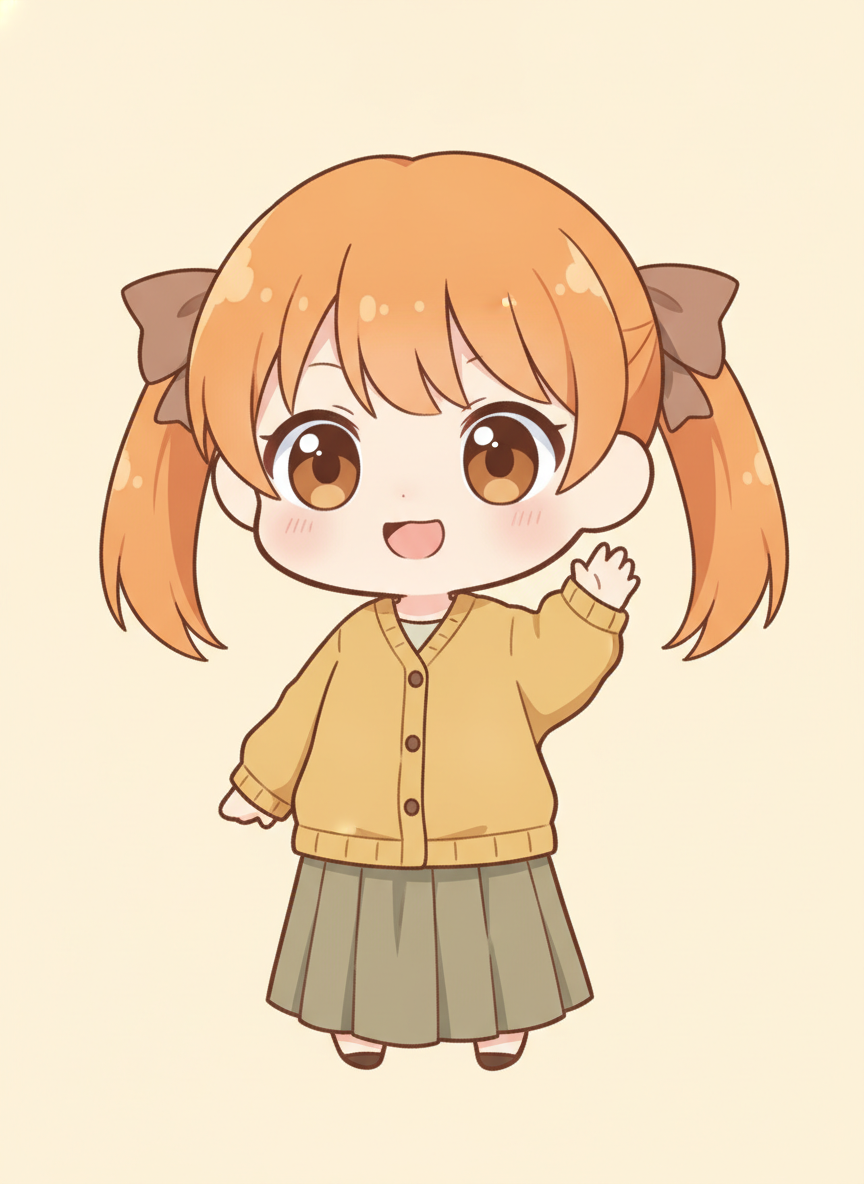
Two Heads Tall, Exactly — and No Feet
The proportion brief landed precisely: measure it and the figure is almost exactly two heads tall, with the orange twin tails, brown ribbons, mustard cardigan and below-the-knee skirt all correct. Then look down. The skirt swallows the legs and only two shoe tips survive, and the hand that is not waving is a fingerless nub. This is a good chat-corner or starting-soon graphic and a poor rigging reference, because a rigger has to see the hands and the feet to separate them.
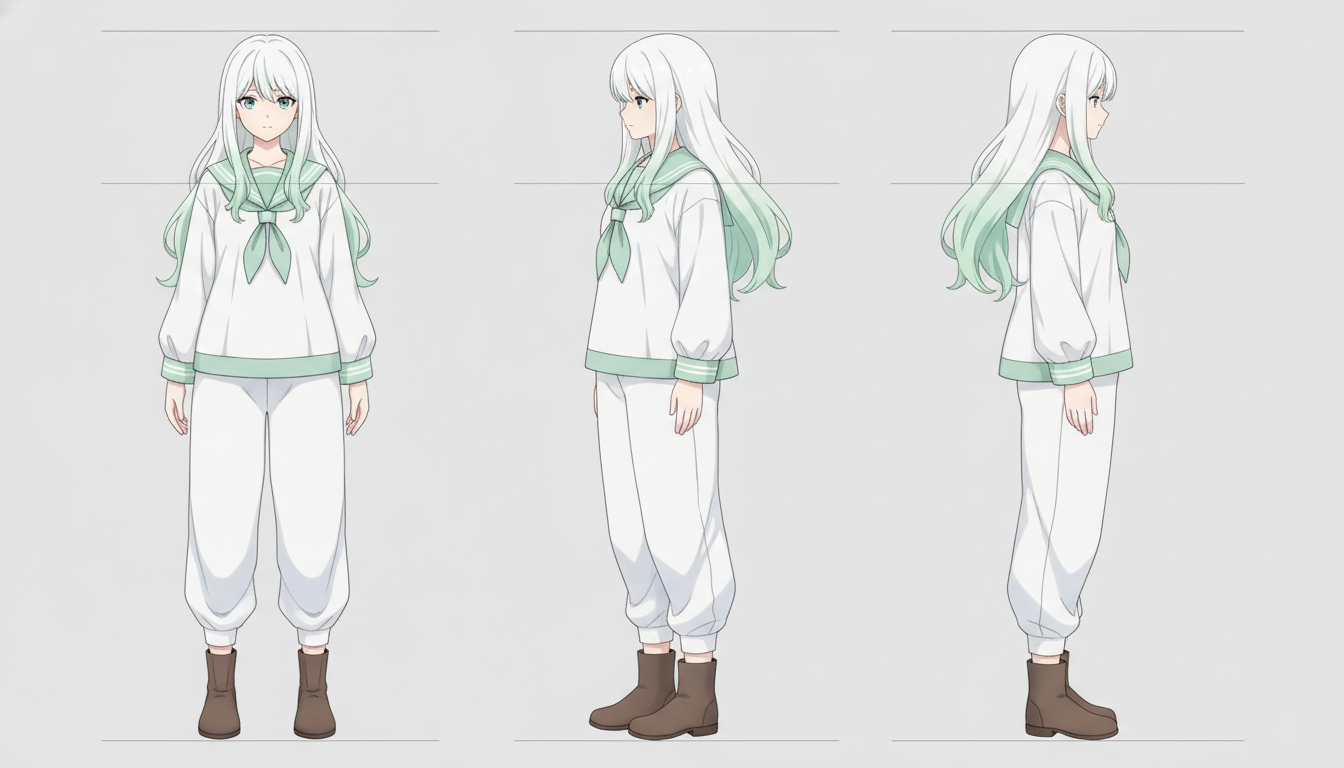
Front, Side, and a Back View Nobody Asked For
The palette holds beautifully across all three views — white top, green sailor collar, green cuff bands, brown ankle boots, white hair with mint tips — and that consistency is what a single generation buys you. What it did not do is the sheet that was asked for. The three views requested were front, three-quarter and side; what came back is front, side and a rear view with the head turned. The three-quarter is the one view a rigger most needs, and it is the one missing. The guide lines give the second fault away: three short broken segments at slightly different heights rather than one rule across the sheet, because the figures are not at matched height.
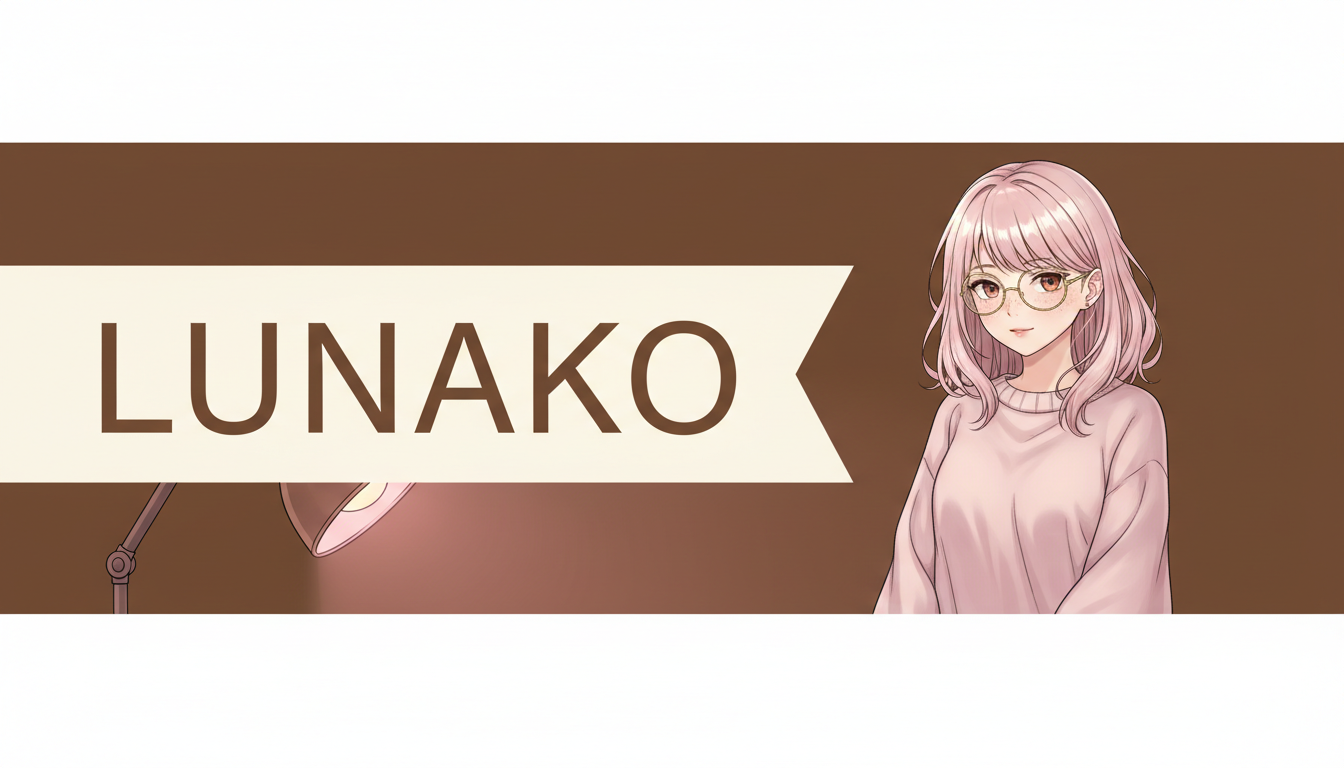
Seven Letters Perfect, Framed Inside Its Own Letterbox
LUNAKO is spelled correctly, evenly spaced and cleanly set. In-image text is genuinely reliable here, and a short invented handle is the safest thing to ask for. The frame is the problem. This was generated at 16:9 and the artwork occupies only a band across the middle, with white bars above and below that nobody requested, so the usable image is much smaller than the file. Crop it before you upload it anywhere with a fixed header size. The freckles asked for never arrived either.
This Makes Reference Art, Not a Rigged Model — and That Distinction Is the Whole Page
What you download is a flat PNG. One image, one layer, no rig. A Live2D model is a layered PSD in which the hair, eyebrows, eyes, mouth, body and each arm sit on separate layers, with everything that hides behind something else drawn in full, and which has then been cut into meshes and bound to parameters so it can blink, talk and sway. A VRM model is a rigged 3D mesh with a skeleton and blendshapes. You cannot extract either from a picture, because the information is not in the picture. There is no layer behind the fringe, no eye behind a closed eyelid, no arm behind the torso. No image generator produces one, and any tool claiming to turn a PNG into a streamable model is describing a different product. So use this for the part it is genuinely good at: ending the argument about who your character is. Riggers and character artists charge by the hour, and most of those hours go on revisions caused by a client who could describe a feeling but not a design. Arrive with a full-body view, an expression sheet, a chibi and your hex values, and you are commissioning a build rather than an exploration. Ask for the pose your rigger needs, not the pose that looks best. The full-body render in the gallery above is attractive and useless for rigging: both hands rest flat against the thighs, fusing the arm silhouette to the body. The Rigging Reference preset on this page asks for an A-pose with visible background between each arm and the torso, open hands, both shoes showing, mouth closed and no hair across the face. That is the version to send.
Character Consistency Is Strong Inside One Image and Weak Across Two
The gallery above proves both halves of that sentence. The turnaround sheet holds its palette exactly across three views — the same green sailor collar, the same green cuff bands, the same brown ankle boots, the same white hair with mint tips — because all three were drawn in a single generation. The half-body portrait and the full-body render, produced separately from prompts asking for the same flat cel-shaded treatment, came back in visibly different art styles: one soft and painterly, the other flat and graphic. Treat every new generation as a new artist reading your brief. It has no memory of the last one. What it has is your description, so the description has to do all the work. The technique that works is a locked block of text. Write your character once — hair colour and cut, eye colour, three named garment colours, one signature accessory, one art style — and paste that identical block into every run, changing only the shot type. Name colours precisely: “mint green” drifts less than “light green”, and a hex value in your own notes stops the drift compounding over weeks. Expect the face to move anyway. Eye shape and face proportion wander between runs even with an identical prompt, which is exactly why the final character has to be drawn once by a human from your references. Pick the single render that looks most like the person in your head, and make that one the reference everything else is judged against.
How the AI VTuber Avatar Generator Works
Three steps, and the first one is the one that decides whether the character holds together
Write the Character Once
Hair colour and cut, eye colour, three garment colours, one signature accessory, one art style. Keep that block of text and paste it into every generation — it is what holds the character together.
Generate the Reference Set
Full body first to fix the silhouette, then a half-body for stream art, an expression sheet for the moods, a chibi for the chat corner and a rigging reference in a clean A-pose.
Brief a Rigger, Do Not Rig This
Send the set as reference with your hex values and your pose notes, and pay an artist to draw it as separated layers. That is the step that turns a picture into something you can stream with.
What a Live2D Rigger Needs That a PNG Does Not Contain
Four things, and a generated image supplies one of them. A layered source file, PSD or Clip Studio, with hair, face parts, body and each arm on separate layers and everything hidden behind something else drawn in full — the back of the fringe, the eye under the eyelid, the shoulder behind the arm. A neutral base pose: front-facing, eyes open, mouth closed, arms held away from the body with clear background beneath them so each arm can be cut out cleanly. A written palette in hex values rather than described in words, so an alternate outfit commissioned six months later still matches. And resolution — models are usually drawn at 4000px or more on the long edge, because the head fills a lot of a 1080p frame when you lean into the camera. Bring the renders from this page as reference, bring the hex values in a text file, and say plainly which single render is the canonical face. Riggers and character artists are used to working from exactly this kind of brief, and the artwork they draw for you is theirs and yours rather than a guess, which is also the version you want attached to a channel you intend to monetise.
Why Use a VTuber Character Design AI
Because the expensive part of a commission is deciding what you want, and that part is free here
A Persona, Not a Profile Picture
Hair, outfit, palette and silhouette designed as one character that has to survive being redrawn from another angle and still read as the same streamer. That is a different job from one nice headshot.
Expression and Pose References
Six-panel expression sheets, full-body views and turnaround attempts — the reference set a rigger or a character artist asks for at the start of a commission, settled before you pay for hours.
Lock the Palette, Repeat the Block
Consistency across separate generations is weak by default. Write the character once as a fixed text block, paste it into every prompt and change only the shot type — that is the technique that works.
Honest About the Handoff
This makes static reference art. It cannot output a layered PSD or a Live2D or VRM file. The page tells you exactly what a rigger needs so you arrive with the right thing instead of the wrong one.
Fits the Rest of Your Channel
Design the persona here, then make the emotes, the stream overlay, the banner and the panels on their own pages so the whole channel shares one palette rather than four.
Free, No Sign Up, No Watermark
About fifteen seconds per render and a clean PNG at the end. Try six directions for your character in an evening instead of one sketch a week from a queue.
Who Uses It
Anyone who has to describe a character to somebody who charges by the hour
New VTubers
You know the vibe and not the design. Six renders in an evening turn “something cosy with green hair” into a specific character you can show a rigger and afford to build.
Established Streamers Rebranding
Trying an outfit update or a second persona without booking artist time. Generate the variants, put them to your community in a poll, commission the one that wins.
Discord and Community Owners
A server mascot needs the same things a VTuber persona needs — a fixed palette, an expression range, a chibi version for reactions — and exactly none of the rigging.
Character Artists and Riggers
Put three directions in front of a client at the first call instead of one sketch a week later, then draw the chosen one properly with the layers the rig actually requires.
AI VTuber Avatar Generator FAQ
Rigging, consistency, expression sheets, ratios and what you can legitimately monetise
Free AI VTuber Avatar Generator — Streamer Persona Design, Expression Sheets and Chibi Art
Almost everyone who starts VTubing starts in the same place: a strong feeling about who they want to be on stream and no way at all to look at it. That gap is expensive, because the people who can close it — character artists and Live2D riggers — charge by the hour, and the hours go on revisions rather than on drawing. A free AI VTuber avatar generator moves that work to the front and makes it cost nothing. You describe the persona — hair colour and cut, eye colour, the outfit, the palette, the mood — pick a shot type, and fifteen seconds later you are looking at it. Change one thing and look again. Do that six times in an evening and you will know your character better than three rounds of paid revisions would have taught you, because you were the one making the decisions rather than approving them.
The six presets are shot types rather than art styles, because a persona is not one picture. The full-body view fixes the silhouette, which is the thing that actually makes a character recognisable at emote size. The half-body portrait is the shot you will use as stream art. The expression sheet settles the six moods your audience will come to know. The chibi version is for the chat corner, the starting-soon card and the sticker pack. The outfit variant tests whether your design survives a wardrobe change. And the rigging reference is deliberately plain and unflattering — a symmetrical A-pose with empty space under both arms, open hands, both shoes visible, mouth closed, no hair across the face — because that is what a rigger has to be able to cut apart. That preset exists because of a mistake visible in the gallery above: the first full-body render put both hands flat against the thighs, fusing the arms to the body, and a rigger would have had to redraw them before starting.
Two honest limits, and they are the reason to trust the rest of the page. The first is that this is static reference art, not a rigged model. A vtuber model generator that hands you something you can stream with does not exist as an image generator, because a Live2D rig is a layered PSD cut into meshes and a VRM is a rigged 3D mesh, and neither can be recovered from a flat picture that has no layer behind the fringe and no arm behind the torso. Design here, then commission a rigger, and you will pay less because the design is already settled. The second is character consistency. Inside one generation it is excellent — the turnaround sheet in the gallery holds the same collar, cuffs, boots and hair tips across three separate views. Across two generations it is weak: the half-body and full-body renders on this page came back in noticeably different art styles from prompts asking for the same one. Write your character once as a fixed block of text, paste it into every run unchanged, name colours precisely, and keep hex values in your own notes.
The persona is one piece of a channel, and the rest of it lives on its own pages here so everything can share a palette. Emotes and sub badges come from the AI Twitch emote generator, channel graphics and starting-soon screens from the AI stream overlay generator, and a header from the AI YouTube banner maker. If what you want is a single profile picture rather than a whole persona, the AI avatar generator is faster; if you want the chibi style on its own for stickers and icons, use the AI chibi generator; and for general anime artwork that is not a character design brief, the AI anime generator is the right page. Reaction images for your Discord come from the AI emoji generator. Everything is free to try, nothing is watermarked, renders come back at 3:4 portrait, and paid plans start at $2.99 if you are designing a whole roster. Scroll back up, describe your persona, and meet them.